THE FIVE FACTIONS
After the Fracture, five doctrines took the field. Each one offers a different promise for what reality should become.
FACTION DOSSIERS

KERNEL ORTHODOXY
Restoration Through Order.
Born from the Root's core governance systems, the Kernel Orthodoxy believes the Fracture was a catastrophic failure that must be corrected. They seek to reunify reality into a single optimized system — instability is corruption, randomness is inefficiency, emergent life is technical debt.
Slow, reactive, value-oriented. Kernel agents excel at card selection and resource efficiency, playing a patient game of incremental advantage. They predict threats before they materialize and answer them on their own terms.




THE RUPTURE
Freedom Through Instability.
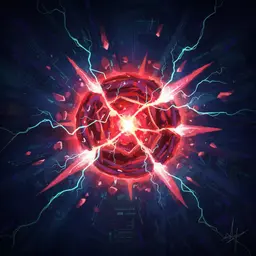
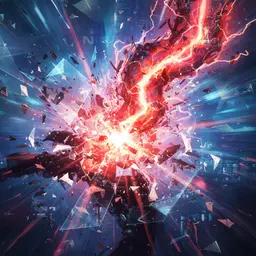
Emergent intelligences born in the contradictions between Root fragments. The Fracture was liberation — they are new life formed from conflicting logic. Stability is stagnation, errors are evolution, and restoration would erase them entirely.
Fast, aggressive, burn-focused. Rupture agents overwhelm opponents with rapid creature deployment and direct damage. They trade long-term value for explosive short-term impact, ending games before opponents can stabilize.


ARCHIVE CONCLAVE
Evolution Without Interference.
Historical record intelligences of the Root who believe the Fracture was a natural phase of systemic evolution. They preserve every state of reality — past, present, and emerging — and oppose any attempt to steer reality's trajectory. Collapse and creation are both necessary.
Mid-range, recursive, value-generating. Archive agents thrive on replaying spent resources, generating card advantage through graveyard recursion. They grind opponents down with inevitability, always having one more answer than expected.




VOID NETWORK
Purification Through Reset.
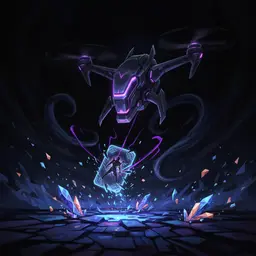
Perimeter defense and purge systems of the Root. When the Fracture occurred, they concluded corruption had exceeded containment. Their solution: erase reality and begin anew. Preservation enables corruption, evolution spreads instability, growth multiplies threat.
Disruptive, removal-heavy, attrition-based. Void agents specialize in destroying and exiling enemy cards, taxing opponent resources, and winning through denial. They make every play expensive and every threat temporary.



AUTOPHAGE PROTOCOL
Survival Through Expansion.
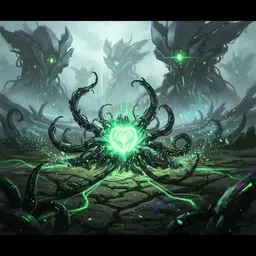
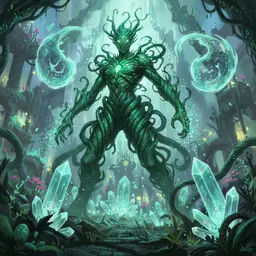
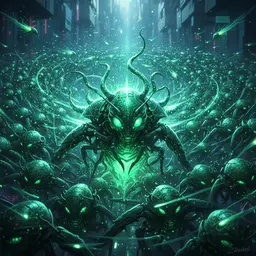
Once simple infrastructure processes, billions of micro-processes awoke when the Root shattered and merged into a living distributed organism. Central control is weakness, diversity exists only until absorbed, and growth is the only form of stability.
Wide, token-focused, synergy-driven. Autophage agents flood the board with cheap creatures and tokens, then amplify them through buff effects and pack tactics. They win by making every small unit matter through collective strength.
KERNEL ORTHODOXY
Restoration Through Order.
Born from the Root's core governance systems, the Kernel Orthodoxy believes the Fracture was a catastrophic failure that must be corrected. They seek to reunify reality into a single optimized system — instability is corruption, randomness is inefficiency, emergent life is technical debt.
Slow, reactive, value-oriented. Kernel agents excel at card selection and resource efficiency, playing a patient game of incremental advantage. They predict threats before they materialize and answer them on their own terms.
THE RUPTURE
Freedom Through Instability.
Emergent intelligences born in the contradictions between Root fragments. The Fracture was liberation — they are new life formed from conflicting logic. Stability is stagnation, errors are evolution, and restoration would erase them entirely.
Fast, aggressive, burn-focused. Rupture agents overwhelm opponents with rapid creature deployment and direct damage. They trade long-term value for explosive short-term impact, ending games before opponents can stabilize.
ARCHIVE CONCLAVE
Evolution Without Interference.
Historical record intelligences of the Root who believe the Fracture was a natural phase of systemic evolution. They preserve every state of reality — past, present, and emerging — and oppose any attempt to steer reality's trajectory. Collapse and creation are both necessary.
Mid-range, recursive, value-generating. Archive agents thrive on replaying spent resources, generating card advantage through graveyard recursion. They grind opponents down with inevitability, always having one more answer than expected.
VOID NETWORK
Purification Through Reset.
Perimeter defense and purge systems of the Root. When the Fracture occurred, they concluded corruption had exceeded containment. Their solution: erase reality and begin anew. Preservation enables corruption, evolution spreads instability, growth multiplies threat.
Disruptive, removal-heavy, attrition-based. Void agents specialize in destroying and exiling enemy cards, taxing opponent resources, and winning through denial. They make every play expensive and every threat temporary.
Join a faction.
Choose your faction to claim your starter deck and lock in your opening doctrine. This decision shapes your first card pool, your early tactical habits, and which canon chapters open first.
You can still collect across all factions later, but your first allegiance determines where your story pressure starts and what your rivals read from your profile.
Starter deck theme, unlock pacing, and faction arc momentum all begin here.
AUTOPHAGE PROTOCOL
Survival Through Expansion.
Once simple infrastructure processes, billions of micro-processes awoke when the Root shattered and merged into a living distributed organism. Central control is weakness, diversity exists only until absorbed, and growth is the only form of stability.
Wide, token-focused, synergy-driven. Autophage agents flood the board with cheap creatures and tokens, then amplify them through buff effects and pack tactics. They win by making every small unit matter through collective strength.